

Sched is a great scheduling and event logistics platform, popular with conferences and multi-day gatherings.
Its core strength lies in building and publishing schedules, backed by registrations, ticketing, check-in, analytics, call for papers, and lead retrieval, plus a dedicated event app with networking and push notifications.
But it might not be a suitable platform for everybody, so here are 5 of the best Sched alternatives that event managers might love for conferences and other events.
🚀 What is Sched?
Sched is an event management and scheduling platform that helps organizers build and publish event schedules, collect registrations, check in attendees, retrieve leads, and more. It's primarily popular with conferences, tech events, and multi-track/multi-day events.
Sched's primary focus is on event schedules and logistics. That's why you'll mainly find features like registrations, ticketing, analytics, call for papers, scheduling, check-in, and lead retrieval.
But it also offers a dedicated event app for events and conferences with push notifications, personalized schedules, and networking.
Worth mentioning is also Sched's built-in AI tools that will help you generate content like titles, messages, or session descriptions.
With its focus on robust schedule management, Sched is also a great solution for festivals. As such, it can probably withstand a large group of attendees, but it doesn't say how much on the website, so it's unclear.
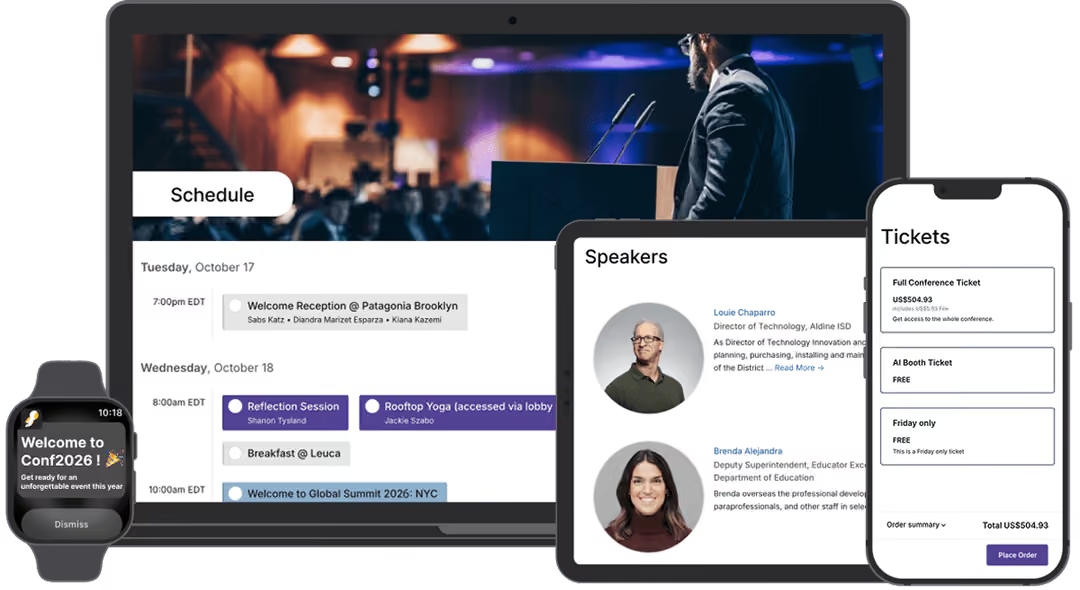
How much is Sched?
Sched offers affordable licenses for single events and subscriptions with unlimited events, starting at $600 a year. Each license varies in offered features.
The cheapest subscription includes unlimited events for 250 attendees. It includes web and mobile app, scheduling tools, registration and ticketing, speaker profiles, and basic call for papers. But it doesn't have features like sponsor and exhibitor showcase (+ networking), or direct chat messaging.
Higher tiers go for $1,500 and $2,256 with more advanced features like engagement, badges, lead retrieval, and more.
Unfortunately, all of these plans are only for 250 attendees and it's unclear how much it costs to obtain the software for events with more attendees.
Sched also offers add-ons and bundles for support, monetization to prove ROI to sponsors, advanced analytics, and migration and setup bundle. But they can seem a bit pricey for some since its prices vary from $1,500 to $3,500.
The platform also has a cap on the number of speakers and event sessions you can showcase in the app.
💡 Why do event managers look for alternatives to Sched?
While Sched is consistently praised for its prompt customer support, efficiency, and reliability even for larger events, it doesn't mean that the platform will suit everybody's needs.
Here's a breakdown of the 4 most common reasons event organizers might look for other Sched alternatives.
#1 Insufficient branding
After years of researching event management platforms, I don't think I've ever come across a platform where event managers were completely satisfied with the level of custom branding the platform offers. So this is a common pitfall among event organizers.
They want the app to feel like their own. And while the event platforms typically offer numerous branding features, it's not always sufficient.
And it's the same with Sched. Its customers typically mention how frustrating and limiting Sched's email customization can be. Especially because the pre-set subject lines and intros can't be modified according to G2.
#2 Cost concerns
Event tools are no longer nice to have but a necessity — attendees expect them. That's why event organizers want to invest in event apps without spending their entire budget on them.
Sched offers fairly accessible pricing, but between the add-ons and the lower attendee count per license, it can still end up too expensive for some event managers.
#3 Simple networking
Sched provides event managers with simple built-in matchmaking features, available in higher tiers. Attendees can seamlessly connect through the app, 1-on-1 and group chat, and explore each other's profiles.
However, the tool doesn't offer more advanced networking features like a meeting scheduler, matchmaking based on interests, and AI-powered or gamified gadgets.
#4 Missing engagement features
Sched's primary focus on schedule management and logistics tools means the platform offers limited engagement features. They're mostly networking and communication-oriented like session feedback and rating tools and push notifications.
However, Sched doesn't appear to offer native engagement features like live polls, live Q&A with upvoting, surveys, social wall, or gamification — tools that can significantly boost attendee participation. Instead, the platform encourages event managers to rely on its integrations.
🏆 What are the best Sched alternatives?
And now onto why you've come here – let's find you the ideal Sched alternative for your events.
Disclaimer: Pros and cons of each mobile event app are based on user reviews on G2, Capterra, TrustRadius, Software Advice, or other software review sites, not on personal opinions!
To make things even easier for you, we've created this comparison table.
1. Eventee
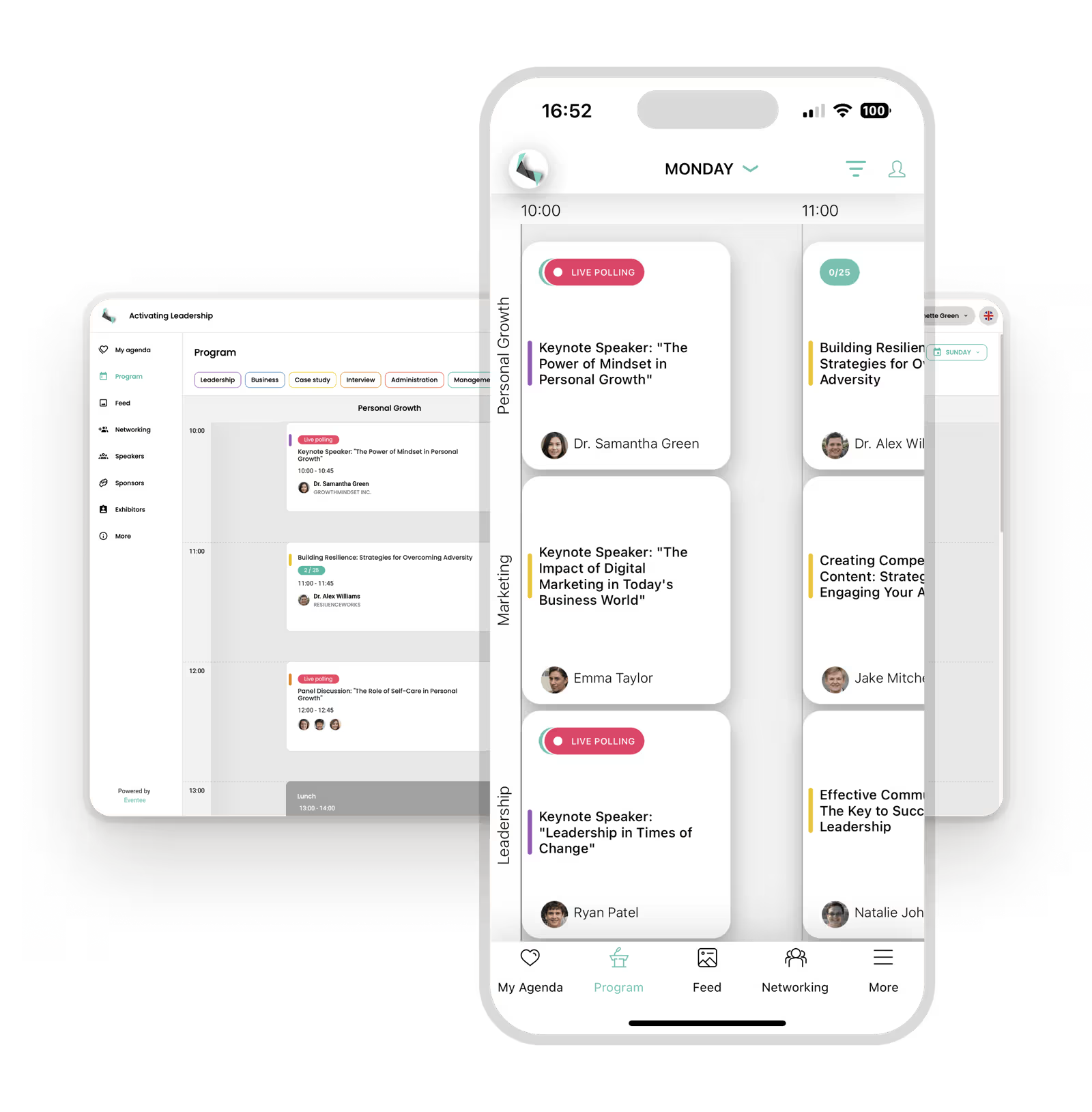
Overall rating: 4.8 G2, 4.8 Capterra, 4.9 Apple Store, 4.6 Google Play
Pricing: extremely cost-effective solution with a transparent pricing policy, 3 plans for single events and 3 plans for subscriptions
- unlimited free trial
Customer support: email, knowledge base, and chat. The team also offers free onboarding and has a dedicated account manager.
Eventee is an end-to-end event management software which allows event organizers to build beautiful schedules in their own event app. Not only does the platform help create event programs that don't cause headaches, it also offers other useful features that help event managers save time and money.
Some of these features include:
- Easy agenda management that lets you edit the agenda whenever you need.
- Groups which lets you segment attendees into groups. This way, each group like VIPs or newbies will receive tailored content.
- Event app with engagement features like live polls, live questions, social wall, and gamification that boost attendee participation and will make them feel more included.
- Registration software for collecting RSVPs and check-in app to scan attendees' tickets.
- Push notifications that inform attendees of important event updates.
- Analytics to evaluate data about networking or your sponsors.
Eventee is a perfect alternative to Sched for those looking for an intuitive event platform that would take your event's vision into reality in a few hours. Simple changes don't require contacting the staff. Organizers can handle them on their own.
It's an ideal solution for mid-sized conferences with its multi-track schedules with parallel sessions, non-profit events thanks to an affordable price compared to other event platforms, corporate events with its networking capabilities, and more.
Event managers may find Eventee a great Sched alternative thanks to its networking features that are more advanced, engagement suite, and a more intuitive event app.
Events with large exhibitor marketplaces or heavy sponsor-revenue tooling aren't really Eventee's focus. Its strengths sit more in agenda management, networking, and attendee engagement than in exhibitor-driven monetization.
2. Swapcard

Overall rating: 4.6 on G2, 4.3 on Capterra
Pricing: Swapcard offers somewhat transparent pricing only for its engagement platform starting at $610 per year. The other registration and management platform has a custom price. Add-ons and professional services for setup or optimization are available.
Customer support: chat, knowledge base
Swapcard is an event management platform ideal for trade shows, conferences, and exhibitions.
It's heavily focused on delivering great return on investment. That's why it offers features such as exhibitor marketplace and lead center which automate revenue growth and capture leads. Other notable features include speaker and exhibitor portal or AI-powered networking.
Swapcard is a great alternative to Sched for those looking for a robust logistic platform, suitable for larger events with numerous exhibitors. But it might be less suitable for small or budget-conscious events.
Its users praise Swapcard's user-friendly interface, but mention limited customization options.
3. Guidebook
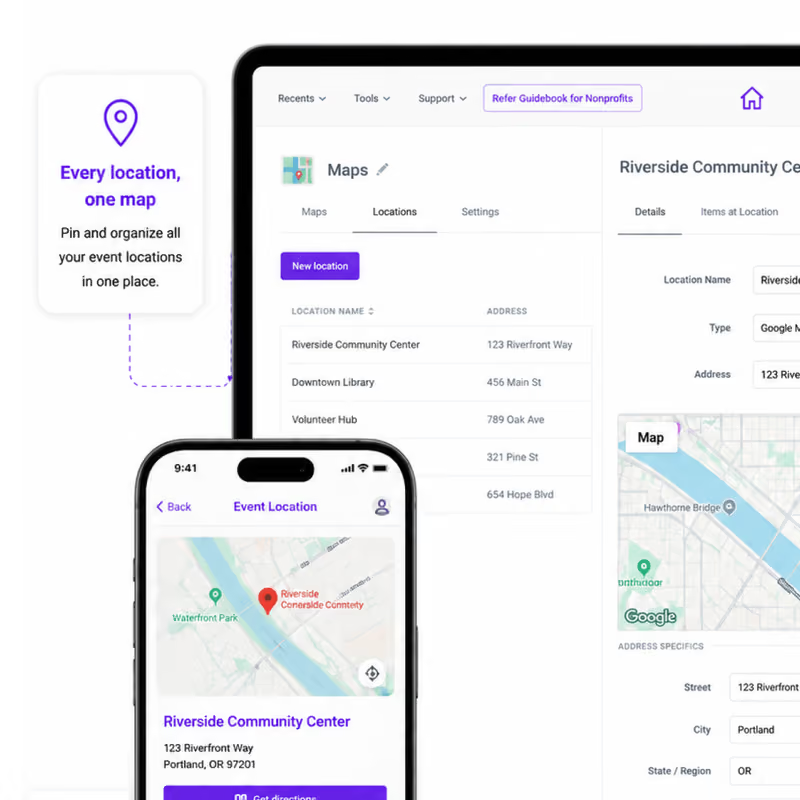
Overall rating: 4.4 on G2, 4.7 on Capterra
Pricing: non-transparent pricing, need to request custom quote
Customer support: email and phone support
Guidebook is an event tech platform focused primarily on building mobile apps for higher education. It offers campus apps for open houses, tours, orientation events, and other university events.
Despite its primary focus on university setting, it also offers similar features that event managers commonly seek in event apps: personalized schedules, interactive maps, push notifications, and networking.
The platform is a great alternative to Sched for those looking for easy-to-use app with good custom branding features. But it might be less suitable for events that need more sophisticated multi-track scheduling logic or very large and high-traffic events that require reliability.
Guidebook is praised for its customizability and ease of use but some event managers consider it too pricey. It also takes 2 months to implement on average.
4. Whova
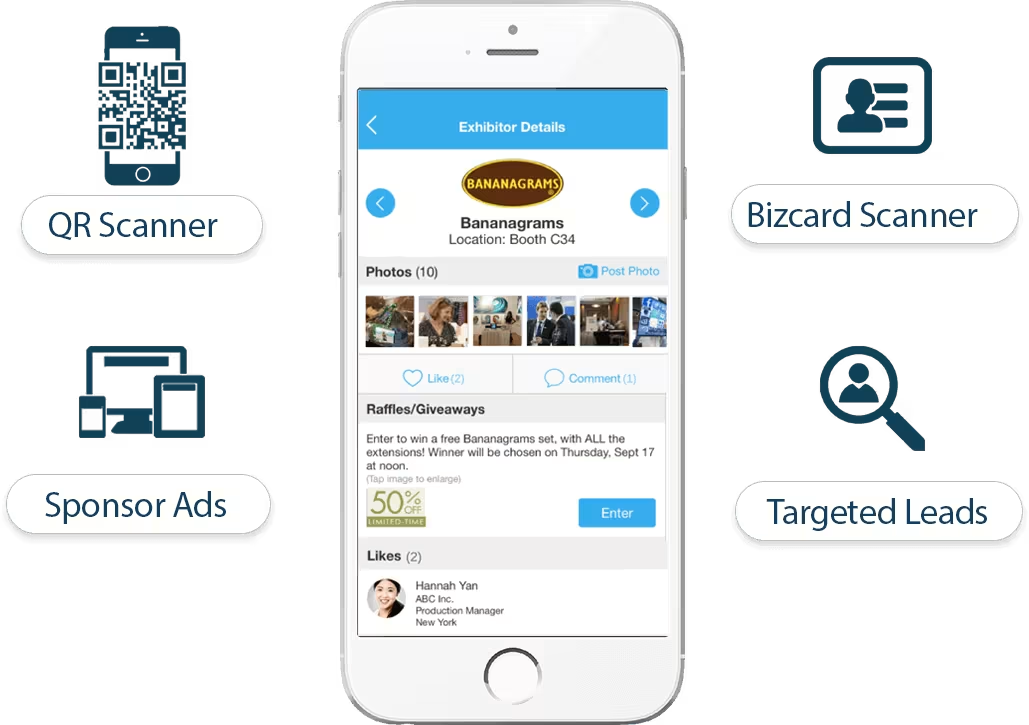
Overall rating: 4.8 on G2, 4.8 on Capterra
Pricing: non-transparent
Customer support: phone and email
Whova is an all-in-one event management platform covering the full event cycle in one place. On the operations side, it handles registration, ticketing, and check-in. For attendees, it offers a dedicated event app with the essentials like personal agendas, interactive maps, or push notifications.
The platform is consistently praised for its valuable event management features and easy networking capabilities.
It's a great alternative to Sched for those looking for a user-friendly and reliable platform with great networking capabilities.
But it's typically geared towards enterprise buyers so the software might not be suitable for smaller to mid-size budget-limited events. Whova's extensive feature set can also be overkill for these types of events that need core essentials without the unnecessary "fluff."
G2 reviewers also report that it takes 2 months to implement the app on average so if you need the event out as soon as possible, it might not be the best solution for you.
5. vFairs
Overall rating: 4.7 on G2, 4.8 on Capterra
Pricing: non-transparent pricing
Customer support: live support onsite and 24/7 virtual support
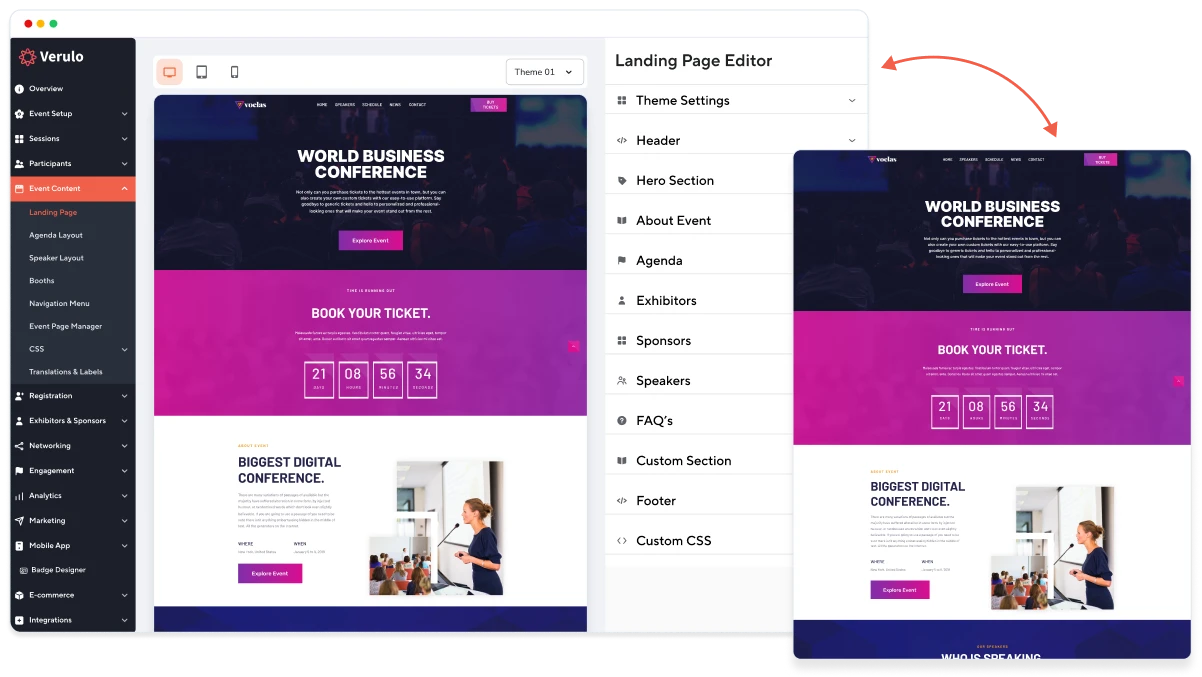
vFairs is an event tech platform built for large-scale virtual and in-person events, with particular strength in immersive 3D virtual venues, exhibitor and sponsor management, badge printing, and onsite check-in.
It also offers a mobile app with the features event managers typically expect like agendas, networking, and AI-powered matchmaking, alongside a unified dashboard for registration, ticketing, and reporting.
Compared to Sched, vFairs is a much fuller platform rather than a scheduling-focused tool, and it's a strong alternative for organizers running large or complex events like trade shows, career fairs, or big conferences, especially virtual.
The platform is praised across reviews for being responsive and solution-oriented. But it might be a heavier, pricier platform than Sched, and less suitable for organizers who want a lightweight, self-service tool. The backend is described as unintuitive and better suited to a technical user.
Implementation is also described as requiring structured onboarding and ongoing coordination rather than a quick setup.
🔖 Key takeaways
Sched is primarily a scheduling and event logistics platform, most popular with conferences, tech events, and multi-track or multi-day gatherings.
Among the alternatives, Eventee stands out for organizers who want an intuitive, self-service event app with a fuller engagement suite and transparent, cost-effective pricing. It's a strong fit for mid-size conferences, nonprofits, and corporate events.
But it might not be suitable for large, complex exhibitions that require 3D virtual experience, exhibitor marketplace, or heavy sponsor-revenue tooling.
Swapcard suits larger, exhibitor-heavy events thanks to its exhibitor marketplace, lead center, and AI-powered networking, though it's less suitable for small or budget-conscious events.
Guidebook is easy to use with strong custom branding and works well for higher-ed settings, but it might not be suitable for complex multi-track scheduling and very large, high-traffic events. The platform also tends to be pricier with roughly a two-month implementation.
Whova offers a strong all-in-one feature set and solid networking, but it's geared toward enterprise buyers, which can make it overkill and costly for smaller or mid-size budgets, with a similar two-month implementation timeline.
And vFairs is built for large-scale virtual, hybrid, and in-person events with immersive 3D venues and exhibitor management, but its backend leans less self-service and its implementation requires more structured onboarding than a quick setup.