
Hybrid event formats are becoming increasingly popular in the event industry. For some, however, they’re not just a trend — they’re essential, as is the case for BRAVE1 and the Ukrainian Startup Fund.
Together, they organize events in a country affected by war, where many participants may hesitate to attend in person due to safety concerns. That’s why hybrid event software like Eventee isn’t just a nice-to-have, it’s a necessity for them.
The state institution and government-backed coordination platform host events showcasing cutting-edge Ukrainian technologies with defense and civilian applications. Their programs feature promising dual-use startups through live pitches, panel discussions, and networking opportunities.
Discover how Ivan Zahorulko and his colleagues from BRAVE1 organize hybrid events amid war and use Eventee to enhance the attendee experience.
What is it like to organize an event during a war?
It's an enormous challenge, both logistically and emotionally. You're always planning with a sense of uncertainty, from air raids to power outages to security risks. At the same time, it gives events like ours a deeper purpose. Dual-use technologies are essential for both resilience and recovery. Organizing something that strengthens Ukraine's innovation and defense ecosystem is incredibly motivating.
.jpg)
What are your biggest challenges when planning events in a war-affected country?
Security is our primary concern, with finding venues that have proper bomb shelters being surprisingly difficult. Many potential participants are hesitant to travel due to safety risks, which affects attendance.
Power outages from infrastructure attacks mean backup generators are essential, not optional. We must have clear protocols for air raid alerts and potentially pause events to move everyone to shelters.
Communication infrastructure can be unstable and challenge our hybrid format, where some participants join remotely. These practical constraints require constant flexibility and multiple backup plans for every aspect of the event.
How do you deal with unpredictable circumstances?
We've developed several strategies. First is the hybrid format implementation. Most of our events now function as both in-person and online experiences, which allows seamless transitions if physical attendance becomes impossible. Second, real-time communication channels and using Eventee to immediately inform all participants about changes. Next, having a modular agenda design and structuring the program in self-contained segments that can be rearranged if needed. And lastly, finding flexible venues with proper shelter facilities, which is essential for safety during air raid alerts.
How do you ensure the safety of attendees, speakers, and staff?
We follow government guidelines and coordinate with local security services. For example, the exact event location was only disclosed to confirmed participants for security reasons. We also had trained staff on-site, clear evacuation protocols, and ensured the venue had an accessible shelter equipped to host all participants safely if needed.
How to utilize technology for an event
What pain points did you face that made you start using a mobile event app?
We needed a way to coordinate a hybrid format under unpredictable circumstances, keep participants updated in real time, and offer a clean, professional experience with a clear agenda, speaker bios, interactive features, and networking tools.
Running events is an extremely time-consuming profession. How do you find the time to implement and manage yet another tool, such as Eventee during the event?
Honestly, Eventee saved us time. It centralized so many functions (agenda, bios, voting, sponsor visibility) that would otherwise be spread across PDFs, emails, and chat threads. It’s like having a mini-event website in your pocket.
How to create the perfect event schedule
Do you have any tips on how to make the perfect program for your event?
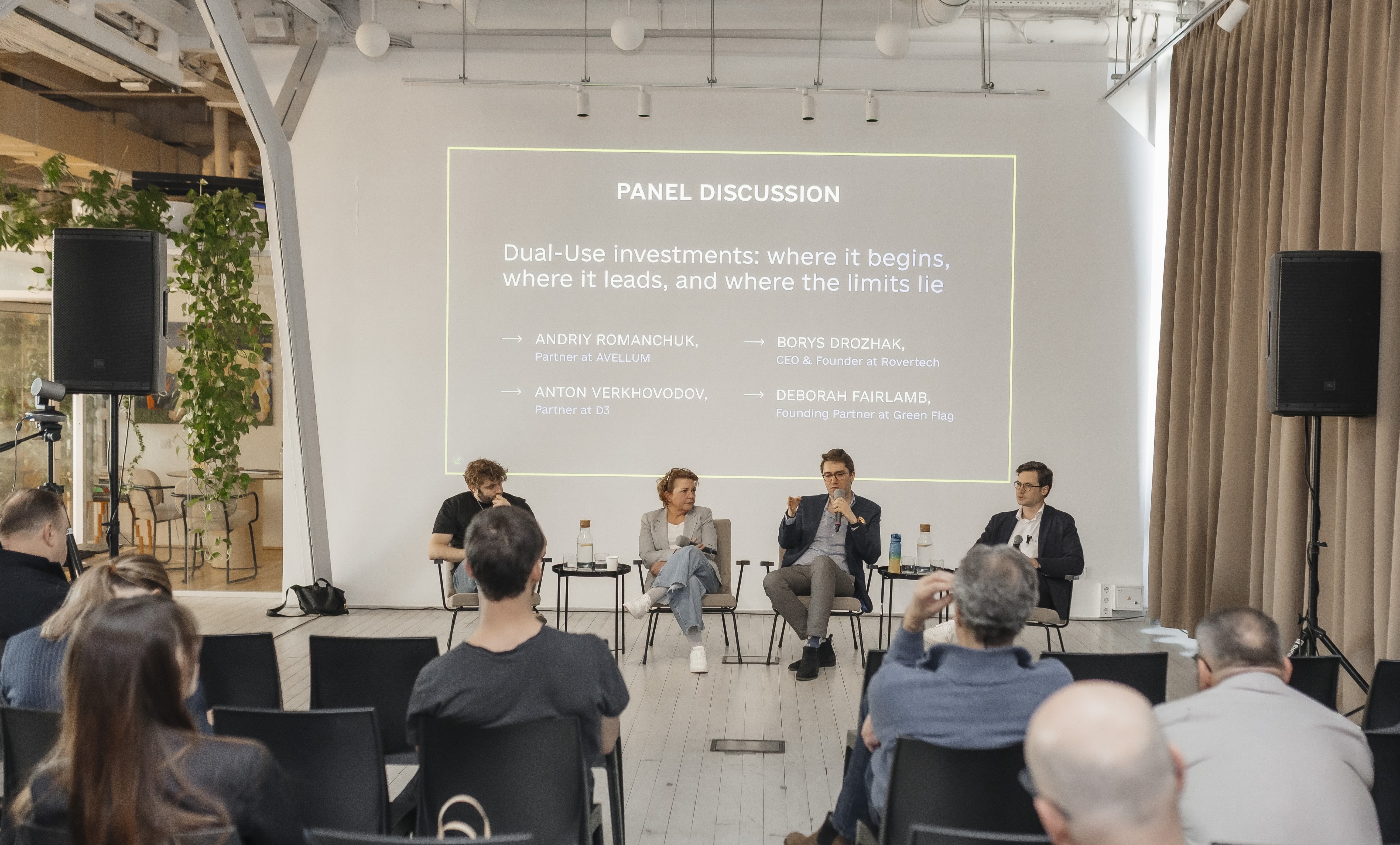
Keep sessions tight and purposeful (our pitches were 5+2 minutes), build in networking time, mix formats – panel + pitch + open Q&A worked great. Share the agenda early, and use an app like Eventee to keep it visible and dynamic.
How to choose the best guest speakers
How do you find the best speakers?
We look for deep expertise in dual-use innovation, active investors in the space, and startup founders with a compelling story. In this event, we focused on people who have hands-on experience in both civil and defense sectors.
How to promote the event
How are you promoting your event to maximize ticket sales and reach your target audience?
We combine community outreach, targeted digital campaigns, and strategic partnerships.
How do you measure the success of your event? What is your major KPI?
Our main KPIs are the number of strategic connections made (e.g., between startups and investors), follow-up investment or support opportunities, and attendee feedback. For us, success means not just attendance numbers but meaningful outcomes like formed partnerships, gained visibility, and traction achieved by the featured startups.
How to find the ideal venue
How do you find the perfect venues for your events?
We balance practicality with security and symbolic value. We scout venues that can accommodate our audience, offer technical flexibility, and critically include or are near shelters. We also consult with local security services and often rely on community or governmental partners for venue recommendations.
What do you think are the key factors to consider when selecting an ideal venue?
Security is the top priority, especially in wartime conditions. Shelter access, generator availability, and communication with local authorities are essential. Beyond that, we look at technical equipment, accessibility, layout flexibility, and the ability to ensure smooth logistics for participants and speakers.
Final recommendations
How do you prepare to make sure it goes smoothly?
Rehearsals, contingency planning, and team alignment. We brief speakers, test equipment on-site, and ensure all staff are familiar with the emergency protocols. Each team member has a printed and digital version of the run of show with key contacts, backup plans, and timing.
Is there anything you wish you had known when organizing your first event?
That even small details, like signage placement or a 5-minute delay in check-in, can affect the whole experience. Also, the importance of having not just a Plan B, but a Plan C, especially when organizing events during wartime. Anticipating stress points and having calm, empowered staff on-site is everything.



.png)